
.png)
For many Muslims, creating an estate plan is an act of responsibility, stewardship, and worship. A thoughtful plan helps you fulfill your responsibilities, communicate your wishes, and align your affairs with Islamic values.
Muslims living in the United States often need an estate plan that works on two levels: it should reflect Islamic principles and also comply with state law so it can be carried out effectively.
Below, you will find guidance to support you as you make thoughtful decisions and document your wishes in alignment with your faith and values, as well as free estate planning tools, available at no cost, that can help make that process simple.
Sharia law and how it connects to estate planning
Islamic inheritance law, commonly called fara'id, provides a framework for distributing an estate among eligible beneficiaries. Guidance commonly notes that close family members such as spouses, parents, sons, and daughters may have prescribed entitlements under Sharia.
A Muslim will may also include a bequest of up to one-third of the estate to individuals not already entitled to a fixed share, or for charitable purposes, subject to relevant Islamic rules and local legal requirements. This balance is part of what makes Islamic estate planning distinct: it seeks to care for beneficiaries, fulfill duties, and leave room for generosity.
How a Sharia inheritance calculator can help
A Sharia inheritance calculator can be a helpful starting point as you begin planning.
It can help you:
- understand who may inherit
- estimate how assets may be divided
- think through charitable gifts
- prepare for conversations with an attorney or religious advisor
This calculator reflects commonly cited Sunni inheritance shares and isn't designed to calculate Shia (Ja'fari) shares. If you follow Shia tradition, please work directly with your scholar to determine your specific shares. If appropriate, you may also consider speaking with an estate planning attorney and a trusted imam so your plan reflects both your faith and your state's legal requirements.
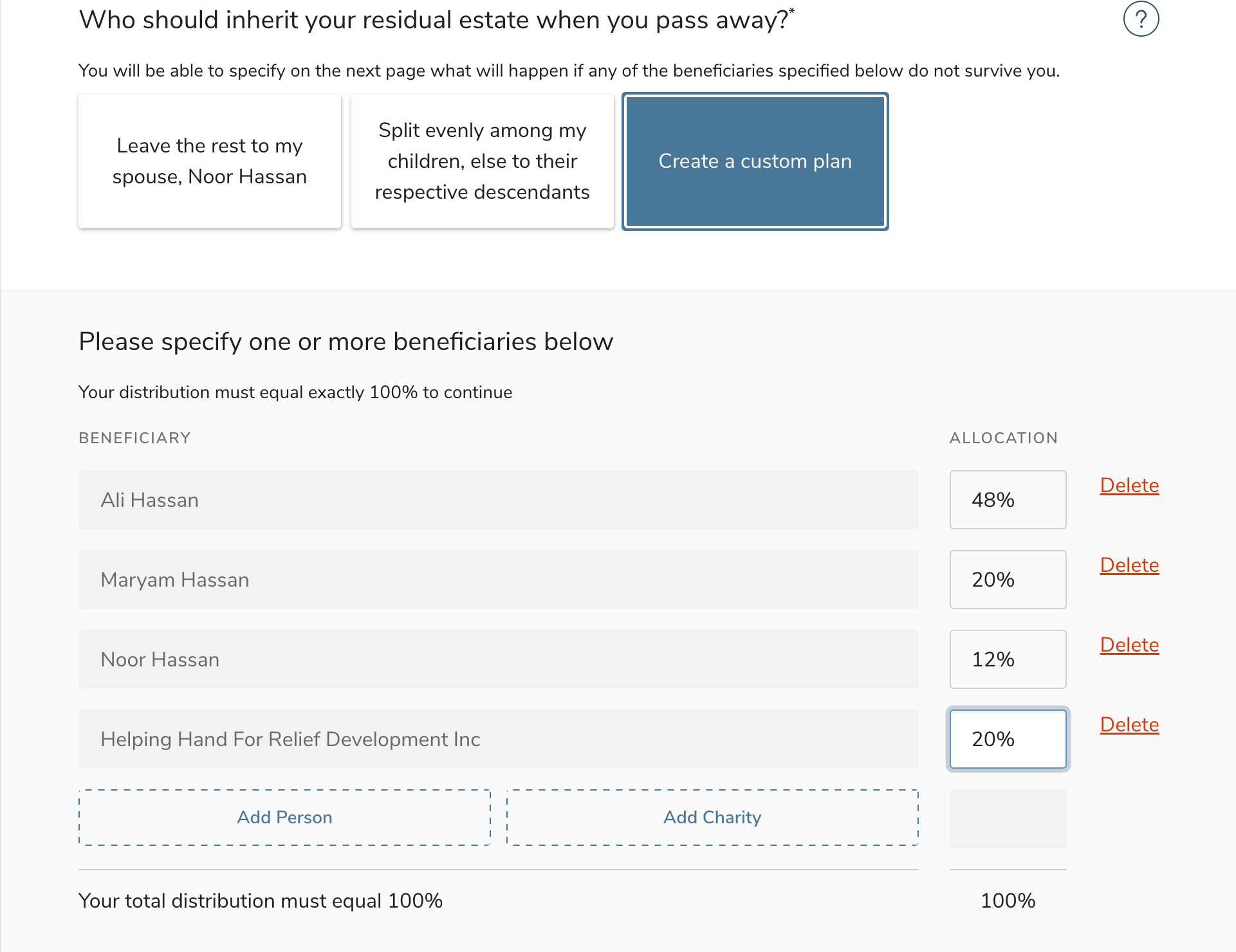
In the "Residuary" section of the FreeWill estate planning flow, you have the opportunity to name who should inherit your residual estate.
Guardianship considerations for Muslim families
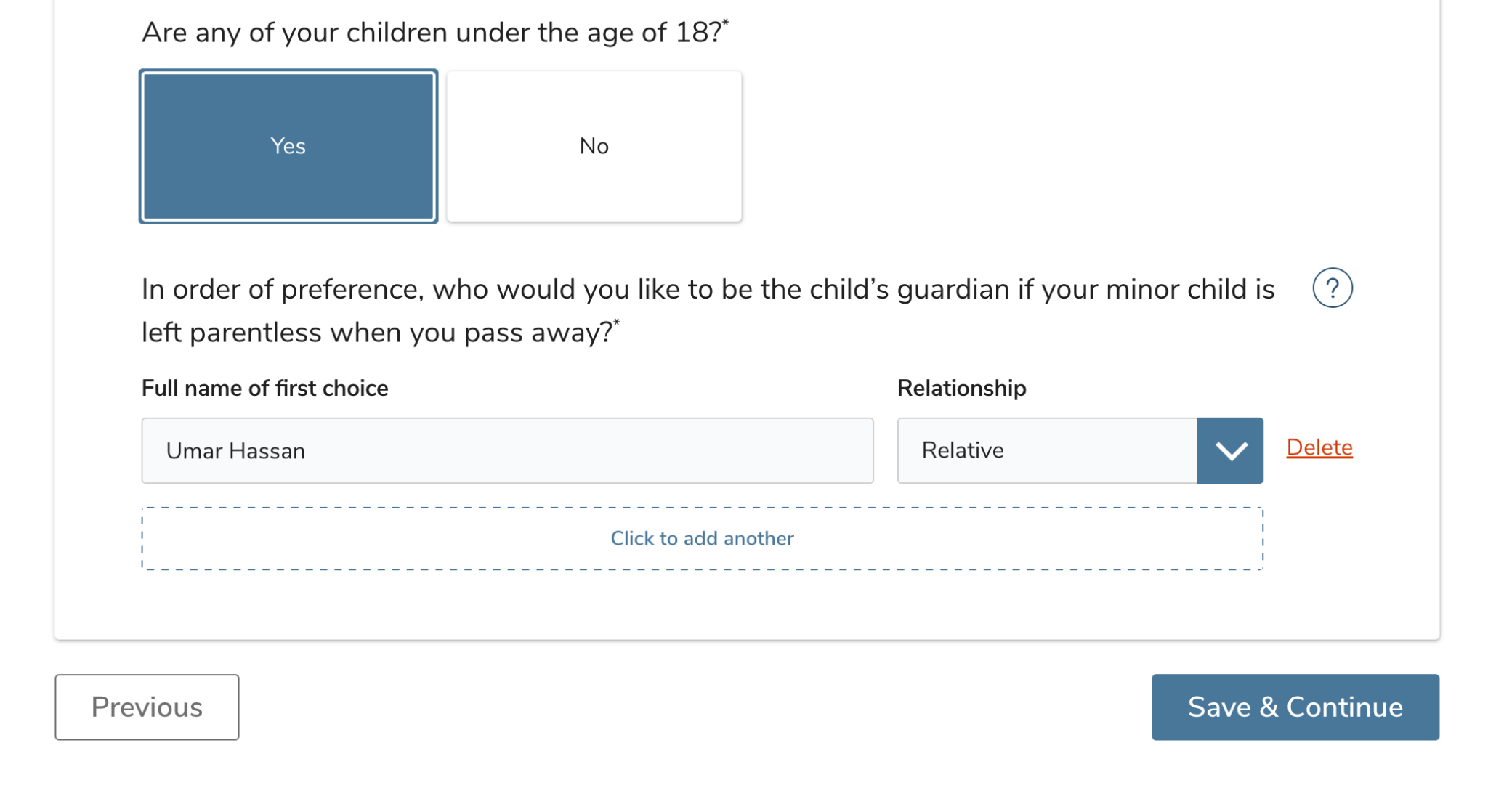
For many Muslim families, guardianship includes thinking not only about who would care for a child, but also how to preserve the child's Islamic upbringing, values, and community ties, subject to state law. Muslims often seek a guardian who is trustworthy (amānah), religiously committed, emotionally stable, able to provide a safe, nurturing home, and willing to raise the child with Islamic practices and ties to the Muslim community and extended family.
In the "Nominees" section of the FreeWill estate planning flow, you will have the opportunity to name your minor children's guardian.
Durable Financial Power of Attorney: Financial decisions guided by your values
As a Muslim, managing your finances, even when they are being managed on your behalf, is an extension of your faith. Islamic principles such as avoiding riba (interest), honoring debts, and fulfilling your zakat obligations can help guide how you approach this document.
A Durable Financial Power of Attorney (DFPOA) allows you to name a trusted person, known as your "agent," to manage your finances if you are unable to do so yourself. When choosing a DFPOA, consider the following:
- choosing an agent who understands your Islamic values
- directing the agent to avoid financial decisions that go against your Islamic beliefs whenever possible
- making sure debts, zakat intentions , and existing charitable commitments are handled appropriately
What powers can be granted in a DFPOA?
- Provide for your family's ongoing expenses
- Handle your taxes and file them on your behalf
- Manage any real estate property you may own
- Continue supporting the charitable causes you care most about
- Take care of your medical bills
- Keep your business or businesses running
- Oversee your insurance and retirement accounts
Planning funeral wishes in accordance with Islam
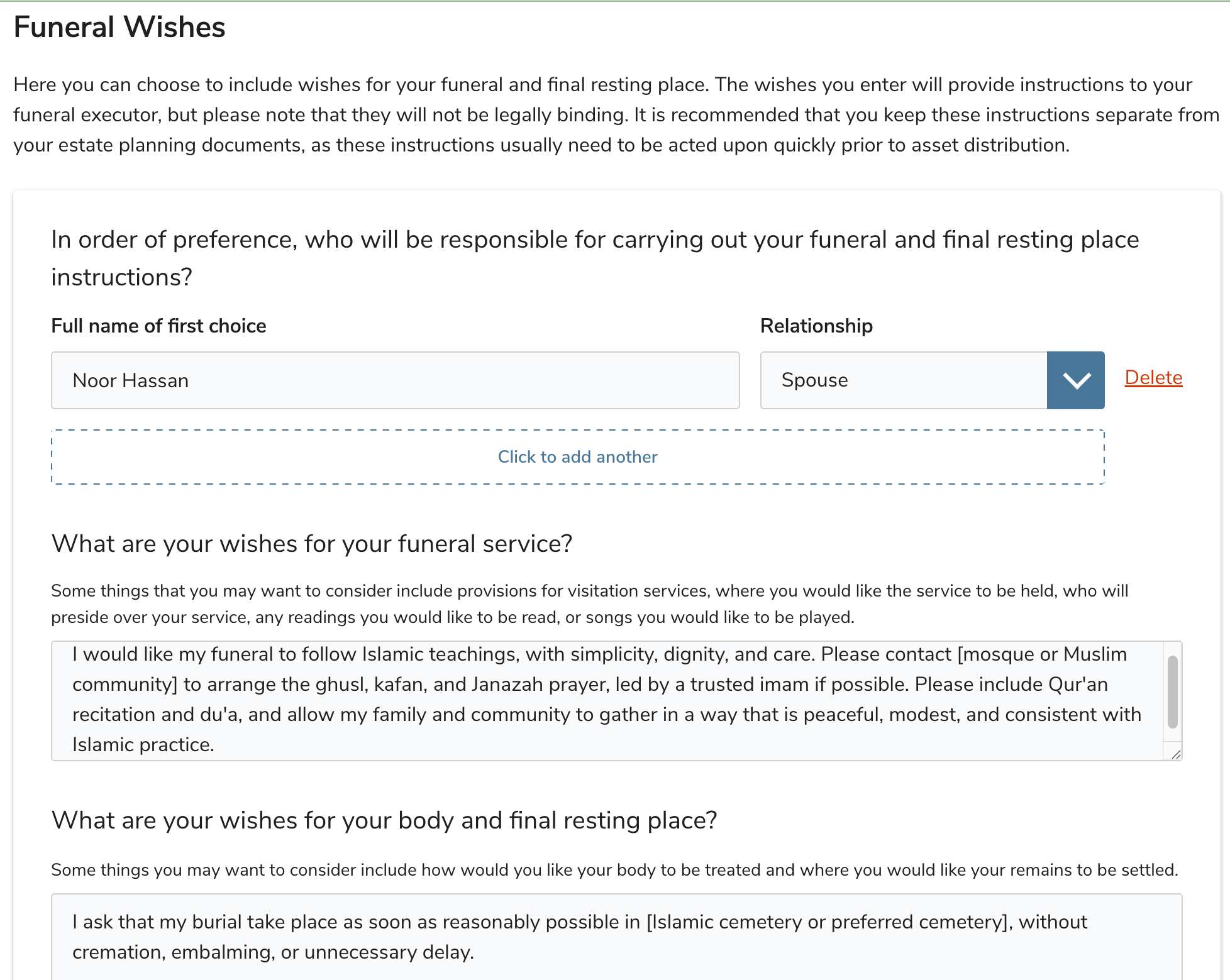
By documenting your funeral wishes, you can help ensure they are carried out with simplicity, dignity, and in accordance with Islamic teachings. Start by naming a trusted person, such as a spouse, family member, or close friend, to carry out your funeral wishes. Consider naming a mosque or Muslim community you'd like to oversee your Janazah, along with any guidance for your family on the Islamic practices that are important to you.
In Islam, burial is the traditional and expected practice, carried out with simplicity and dignity as soon as possible. Specifying your burial preferences, including an Islamic cemetery, can help ensure your wishes are understood and honored in accordance with your faith. You may also want to indicate your preference for prompt burial, ghusl (ritual washing), kafan (shrouding), and burial rather than cremation, in keeping with Islamic teachings.
Take the next step
Planning ahead is an act of faith, care, and responsibility, and FreeWill can help you complete or update these documents at no cost, with step-by-step guidance. As you complete or update your documents, you may also want to speak with a qualified estate-planning attorney and a trusted Islamic scholar so your plans are clearly documented, legally effective, and aligned with your values.
Make your free estate plan today

Make your free advance healthcare directive
Make your free durable power of attorney
Make a stock donation today
Make your free revocable living trust