.png)
As a Muslim, your healthcare decisions may be shaped by your belief in the sanctity of life, your trust in Allah, and your desire to make choices that reflect both faith and compassion. An Advance Healthcare Directive (AHCD) can help you document your wishes, name someone you trust to speak for you, and guide your loved ones and care team if you cannot speak for yourself.
Islamic end-of-life guidance generally emphasizes preserving life, avoiding actions intended to cause death, seeking treatment when beneficial, and allowing treatment to be forgone in some cases if it is medically futile or overly burdensome. Because Muslims may follow different scholars, schools of thought, and cultural traditions, there is not always one answer for every situation, which is why some find it helpful to talk with their imam or a Muslim chaplain before documenting their wishes. An AHCD gives you a way to reflect on your values and record preferences that align with your faith.
Why an AHCD can be helpful for Muslims
An AHCD can be helpful for Muslims because it lets you appoint a healthcare agent you trust, clarify how your faith should inform decisions, share preferences about comfort care, prayer, modesty, and family involvement, and reduce stress for loved ones during difficult moments.
Steps you can take
- Appoint a healthcare proxy: Choose a trusted loved one or friend to serve as your healthcare agent. Consider someone who understands your Islamic values, is willing to honor your wishes regarding medical treatment and end-of-life care, and will consult a trusted imam or scholar if questions arise.
- Document your wishes in line with your faith that reflect your healthcare preferences and include any religious considerations important to you.
When you are ready, FreeWill's planning tools can help you begin creating your Advance Healthcare Directive in a practical, guided way.
Faith-based considerations you may want to reflect on
1. The sanctity of life
Islam teaches that human life is sacred. Many Muslims want their healthcare decisions to reflect reverence for life and accountability to Allah. For that reason, Islamic guidance generally distinguishes between allowing a natural death in certain medical circumstances and taking steps intended to end life. On this basis, euthanasia and assisted suicide are broadly rejected under Islamic teaching.
2. Whether treatments are beneficial, burdensome, or medically futile
Islamic end-of-life ethics generally hold that life-sustaining treatment may be withheld or withdrawn when qualified physicians determine that treatment is futile or only prolongs the dying process without meaningful benefit. Many sources also emphasize that basic care, including nutrition, hydration, and comfort, should continue. Because opinions can vary across schools of thought, families often consult their own imam or religious advisor alongside the medical team.
3. The importance of choosing a trusted healthcare proxy
If you become unable to communicate, your healthcare agent may need to make difficult decisions on your behalf. Muslim guidance on advance directives often recommends appointing someone who understands your religious values, can communicate effectively with clinicians, and is willing to consult family and a trusted imam or scholar if questions arise.
4. Comfort care and pain management
Many Muslims want reassurance that receiving pain relief, hospice, or palliative care is not the same as intentionally hastening death. Islamic end-of-life resources generally support palliative care, especially when the goal is to reduce suffering rather than cause death.
5. Spiritual and religious needs at the end of life
For some Muslims, it is important that an AHCD or related care plan reflect spiritual needs such as access to prayer, Qur'an recitation, halal food, modesty, same-gender clinicians when possible, and support from an imam or Muslim chaplain.
Important sections to consider in the FreeWill Advance Healthcare Directive
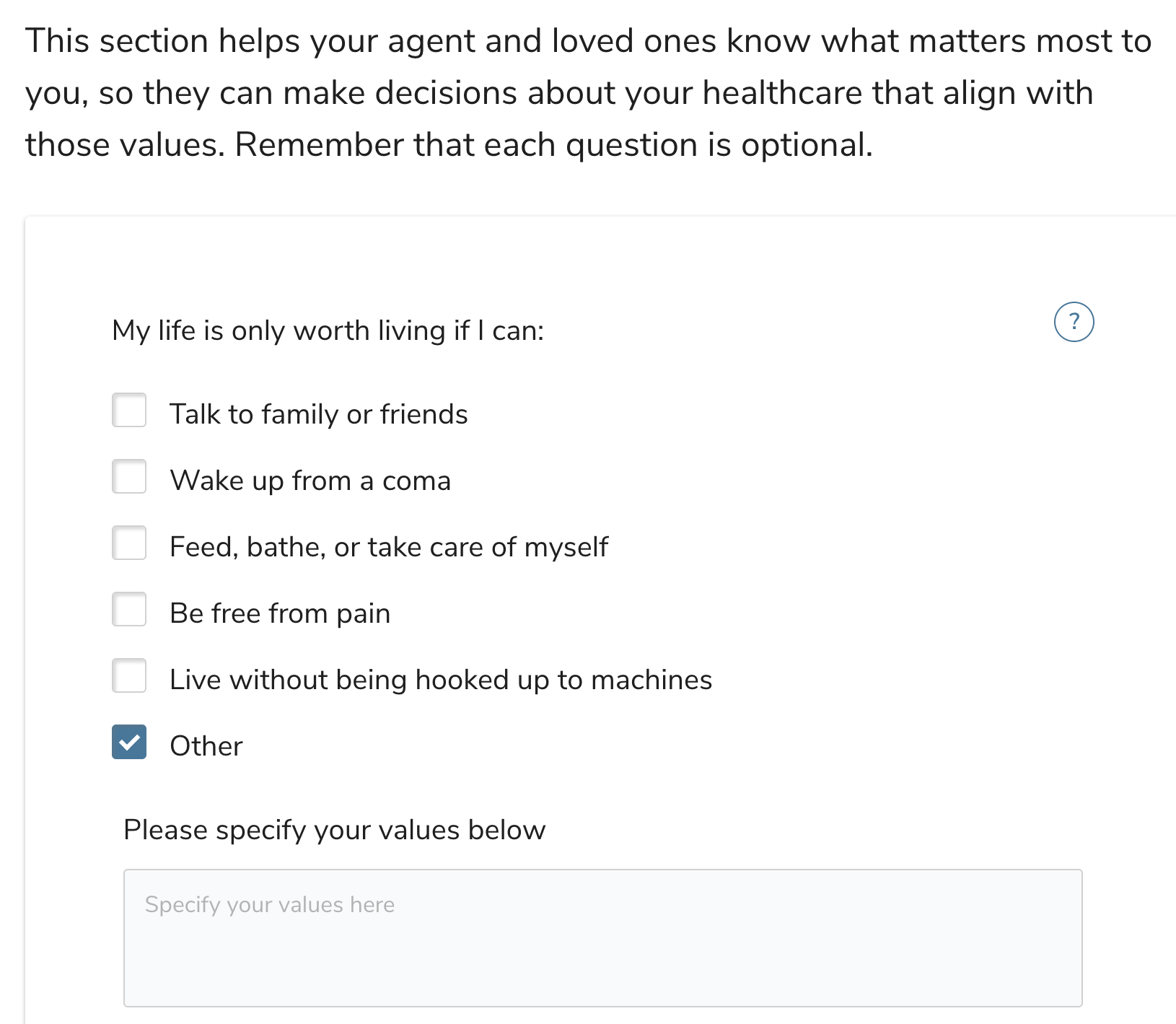
Under the section, "My life is only worth living if I can..." choose "Other" and share your wishes based on your faith (see sample text below).
"As a Muslim, I believe life is a sacred trust from Allah and should be treated with dignity and care. I do not want my death to be intentionally caused by euthanasia, assisted suicide, or any act meant to end my life. At the same time, I understand that Islam does not require burdensome or futile treatment that only prolongs the dying process. I ask that decisions about my care reflect Islamic values, including compassion, dignity, and relief of suffering, with consultation from trusted Muslim advisors when needed."
Create or update your Advance Healthcare Directive
Take the Next Step
Planning ahead is an act of faith, care, and responsibility, and FreeWill can help you complete or update these documents at no cost, with step-by-step guidance. As you complete or update your documents, you may also wish to speak with a qualified estate-planning attorney and a trusted Islamic scholar so your wishes are clearly documented, legally effective, and aligned with your values.
Make your free estate plan today

Make your free advance healthcare directive
Make your free durable power of attorney
Make a stock donation today
Make your free revocable living trust